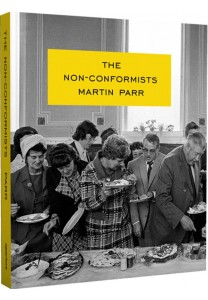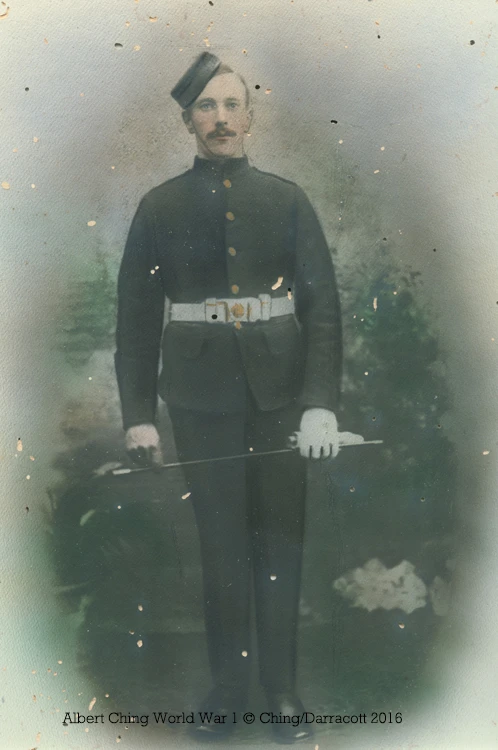
The Missing of the Somme – Geoff Dyer (Phoenix Press 1994)
Geoff Dyer was born in 1958, and is an English writer. He was educated at Corpus Christi College. He is a successful author of several books, and he is currently based in Los Angeles.
Geoff Dyer’s book ‘The Missing of the Somme’ covers lives lost, and remembrance during and beyond ‘World War One’. Although referred to as ‘The Great War’, there was certainly nothing ‘great’ about it, what was great however, was the loss of human life, and that of mourning.
The books one hundred and thirty pages, devotes itself to the above events, and, in addition: The images and early movie documentary coverage, the memorials and sculptures, written works, poetry, and that of the dead.
There were so many service personnel that were simply obliterated into nothing, into thin air. These lost souls, at the time had no graveyard, and were only a memory.
They shall grow not old, as we that are left grow old:
Age shall not weary them, nor the years condemn.
At the going down of the sun and in the morning
we will remember them.
Laurence Binyon (1869 – 1943) published in The Times September 1914
The above is actually the fourth verse taken from Laurence Binyon’s poem ‘For the Fallen’.
Poetry, verse and written works of the day were used to both voice and remember the utter chaos of war, the dying and the dead.
The poet who was most popular during this war was Wilfred Edward Salter Owen (1893 – 1918). Owen was quoted as being the greatest writer of war poetry during the war. He was killed close to the village of ‘Ors’, on the Sambre canal. He was twenty five years old. The news of his death reached his parents as the armistice bells were ringing.
More information can be found here:
http://www.warpoetry.co.uk/Owena.html
Whilst an eleven year old, Eric Blair wrote:
‘Awake Young Men of England’
Oh! Give me the strength of the lion
The wisdom of Reynard the Fox
And then I’ll hurl troops at the Germans
And give them the hardest of knocks.
Oh! Think of the war lord’s mailed fist,
That is striking at England today:
And think of the lives that our soldiers
Are fearlessly throwing away.
Awake! Oh you young men of England,
For if when your country’s in need,
You do not enlist by the thousand,
You truly are cowards indeed.
Eric Blair went on to use the pen name of George Orwell… The above poem was his first published work. Times (London) 1914
Every family was touched by the effects of World War One (WW1) – the war to end all wars that was promised to last only three months, and would end by Christmas.
Whilst Dyer’s book shows poems, verse and written work that tried in vain to bring home some of the horrors of war. One then comes across the following statement: That, ‘in the months succeeding the main battle of the Somme the dead still lay on the ground, in various levels of decomposition, upwards of four deep.’ I would say that there are no words that could describe or help the poor souls who witnessed that.
Like Dyer, I recall seeing compilations of black and white movie footage. This early form of documentary work, depicted soldiers in WW1. The camera catches glimpses of everyone in frame, who either stop, or ‘grin’, and smile towards the lens. Dyer is correct when he informs us that it’s akin to a grinning contest.
The films of that era can also confuse, as they were shot on a hand-cranked camera. This had a frame rate of 16 to 18 frames per second. This, when shown through a modern day projector, at the usual 24 fps rate, can appear comedic. This might confuse the viewer, into thinking that they are watching something similar to a, ‘Mack Sennett – Keystone Cops’ movie.
This brief element of humour however, is short lived. As we then read the fact that on so many occasions, soldiers marching towards the front line, march pass mass graves that had been excavated prior to large battles.
Images at the time have a certain poignancy all of their own. Whilst some may show the aftermath of battle some were captured showing grief, loss but mostly camaraderie.
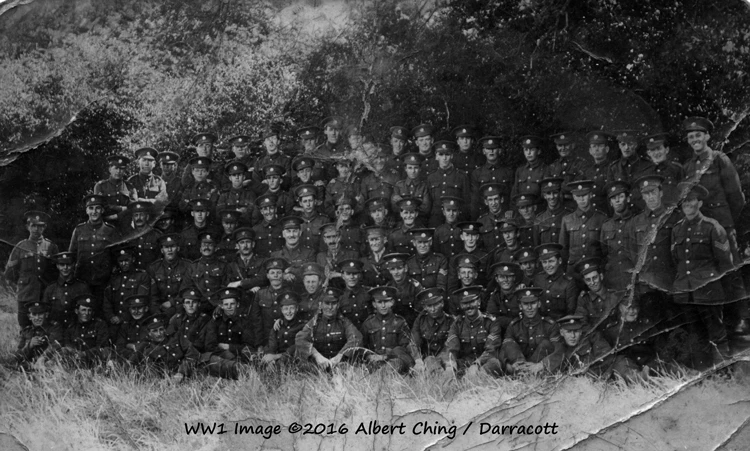
It might be quite surprising to learn that England sustained little damage during WW1 (in comparison to WW2). However, Britain lost 10% of its male population under the age of 45. They simply disappeared. There were no bodies, and ultimately no burial. The nation wanted to remember. This amount of grieving brought about the construction of memorials to the fallen. These were erected in every Village, Town and borough. The people needed to mourn.
The Imperial War Graves Commission then began work on establishing cemeteries as permanent memorials to the fallen.
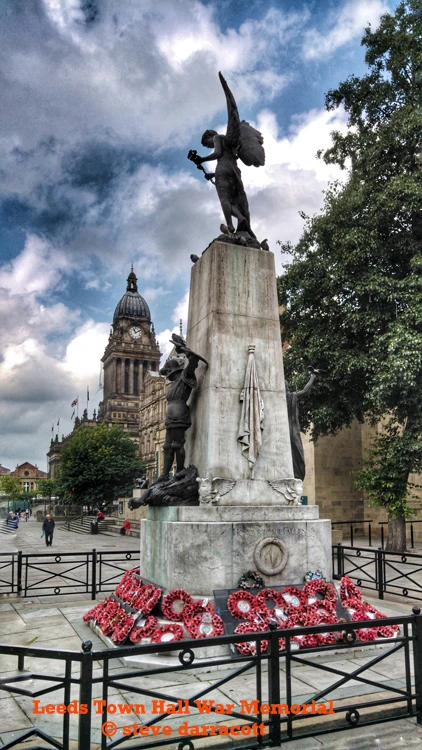
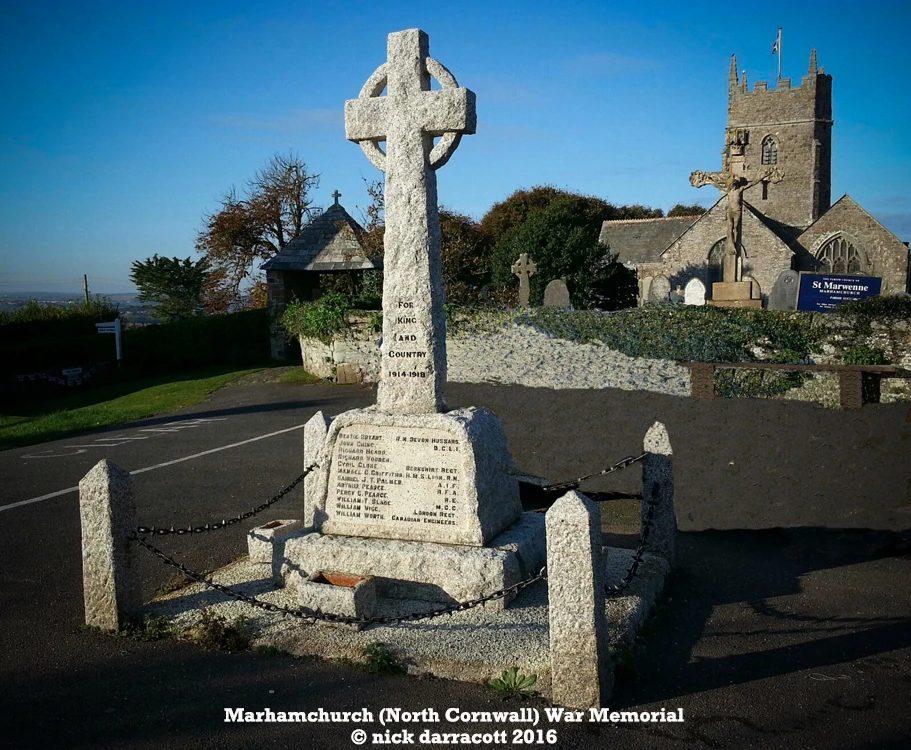
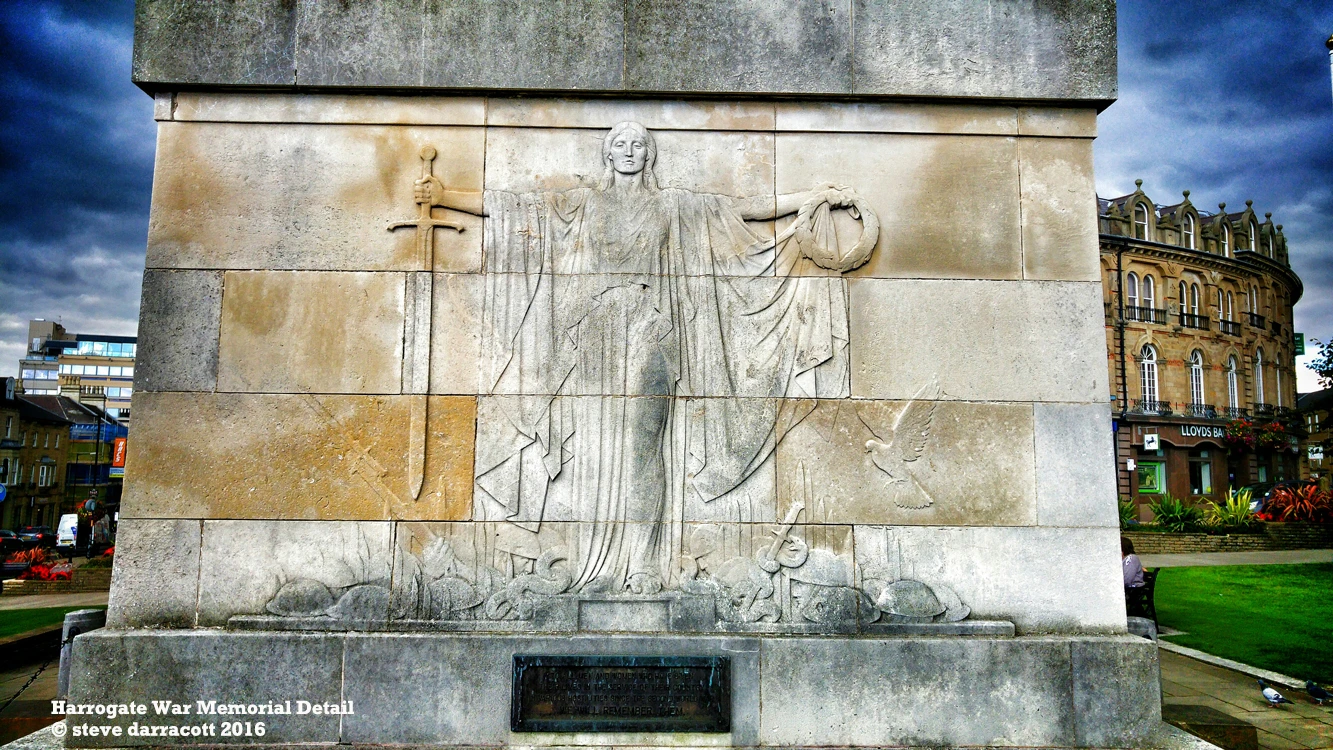
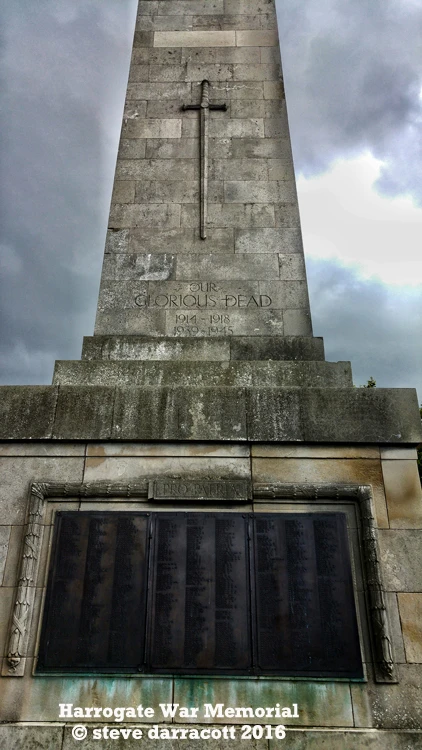
It could be said that memorials are a work of art, sculptors’ like Charles Sargeant Jagger, Walter Allward, and Anthony Barnet( to name but a few) were masters.
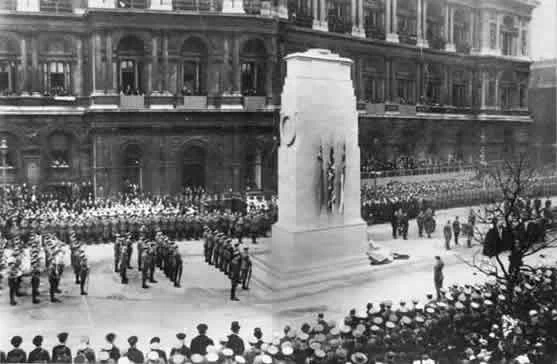
The Cenotaph in London was made of Portland stone and in 1920 this was unveiled. It also coincided with the burial of the ‘Unknown Soldier’. It is where Dyer quotes: Major General Sir Fabian Arthur Goulstone Ware, then the head of the Imperial War Graves Commission. His comments were that ‘if the Empires dead marched, ‘four abreast’ along Whitehall, it would take them three and a half days to pass the Cenotaph.
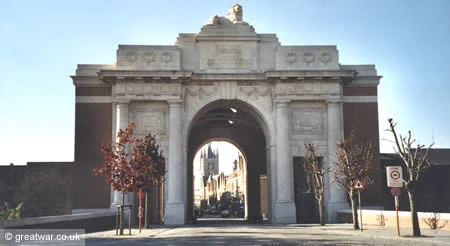
The ‘Menin Gate’ (1936) has 54,896 men’s names carved upon it. It was here that (Lord) Field Marshal Herbert Charles Onslow Plumer, declared on behalf of the bereaved: ‘He is NOT missing, he is here’.
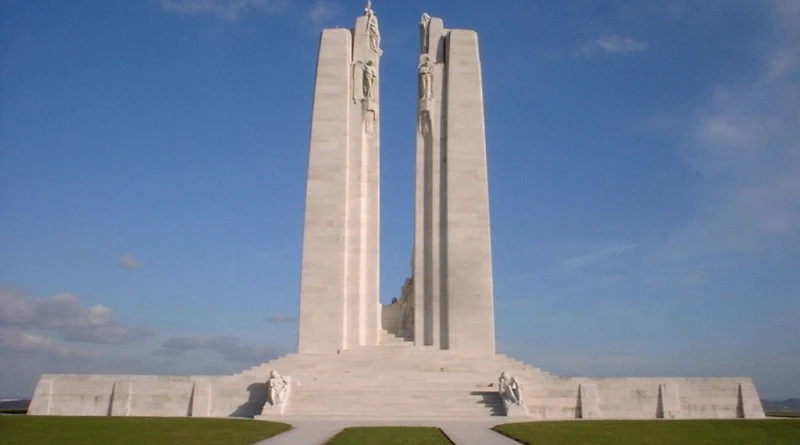
The Canadian War Memorial at ‘Vimy Ridge’ took eleven years to construct, and was the last of the [great] war memorials. It contains the names of 11,285 Canadian missing men, with no known graves. This behemoth was designed and built by the sculptor Walter Allward.
This year, over the period of September & October (2016), will herald a century that has passed since the battle of the Somme. The subject of war can be all consuming. Geoff Dyer’s account of its history within the book, I found was extremely informative. What I thought I knew – I had clearly forgotten. The book provides routes for the reader to progress – should they so wish. This medium sized paperback provides the reader with so much information, and (in my case) it was readily digested. It has certainly highlighted the amount of loss suffered, and more importantly the amount of lives that went missing.
The vast numbers quoted belies belief: with both France & Germany having a combined loss of 1,500,000. Russia’s loss totals 2,000,000. The British Empire losses were 1,000,000. Four and a half million lives lost. Now, whilst my calculations are not exact, I believe it would take almost sixteen days for these dead souls to march along Whitehall and past the Cenotaph.
Bibliography:
Laurence Binyon – For the Fallen. Available from-http://www.greatwar.co./poems/laurence-binyon-fo
Eric Blair -Awake Young Men of England. Available from: http://4umi.com/orwell/poetry/awake
Cenotaph Image – http://www.nationalarchives.gov.uk/pathways/firstworldwar/aftermath/p_cenotaph.htm
Menin Gate – http://www.greatwar.co.uk/ypres-salient/memorial-menin-gate.htm
Vimy Ridge Canadian War Memorial – http://northbaynow.ca/vimy-ridge-issue-comfortable-complacency/